

List Entry Information
Status
Listed
List Entry Status
Historic Place Category 1
Access
Able to Visit
List Number
7472
Date Entered
15th September 2000
Date of Effect
15th September 2000
City/District Council
Auckland Council
Region
Auckland Council
Legal description
Waiheke SD Blk IV, Waiheke Parish Allot 135 (NZ Gazette 1984/2271)
Status
Listed
List Entry Status
Historic Place Category 1
Access
Able to Visit
List Number
7472
Date Entered
15th September 2000
Date of Effect
15th September 2000
City/District Council
Auckland Council
Region
Auckland Council
Legal description
Waiheke SD Blk IV, Waiheke Parish Allot 135 (NZ Gazette 1984/2271)
Why is this place significant?
Historic Significance
Historical Significance or Value This historic place was registered under the Historic Places Act 1993. This report includes text from the original Historic Place Assessment Under Section 23 Criteria report considered by the NZHPT Board at the time of registration. Historical: A long range counter-bombardment battery for the Port of Auckland was first suggested for the Waiheke site in 1938 but final authorisation was not granted until 1942. Many difficulties were encountered over the shortage of construction materials, workers and the sites isolation so that by January 1944, the project was way behind schedule. Noting the large increase in budgeted costs and the overall progress of the war in the pacific, army authorities decided to cancel what they could. The constructional part of the project was completed by mid-1944, when workers were transferred to the Karapiro Hydro project. Army personnel then slowly installed the remaining two guns. By then it had been decided to complete the battery only for training purposes, so the job was not given priority. When the men were withdrawn in 1946 only No.1 gun had been installed, No. 2 lay disassembled by the side of the pit. The site was sealed up for two years when in 1948 No.2 gun was finally installed, and the site was sealed up again. In 1951, as part of a training exercise, each gun was fired twice. The site was scrapped in 1960-61.
Physical Significance
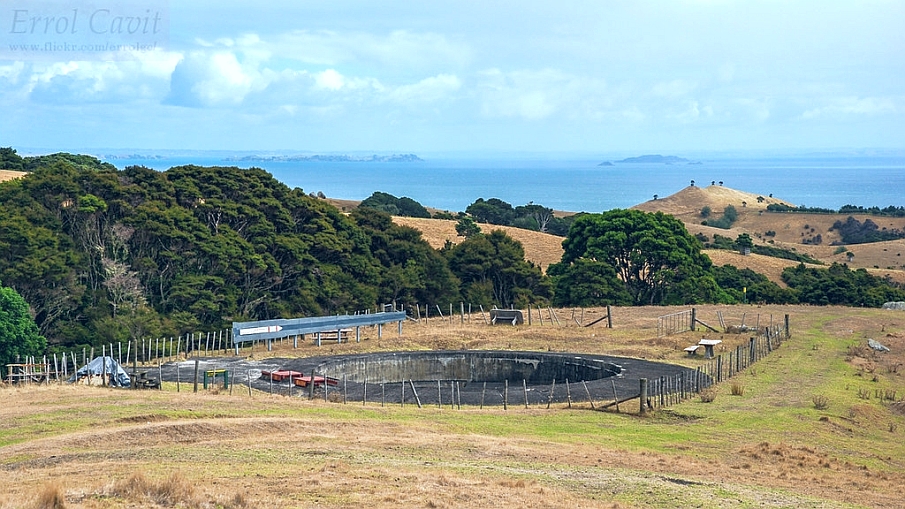
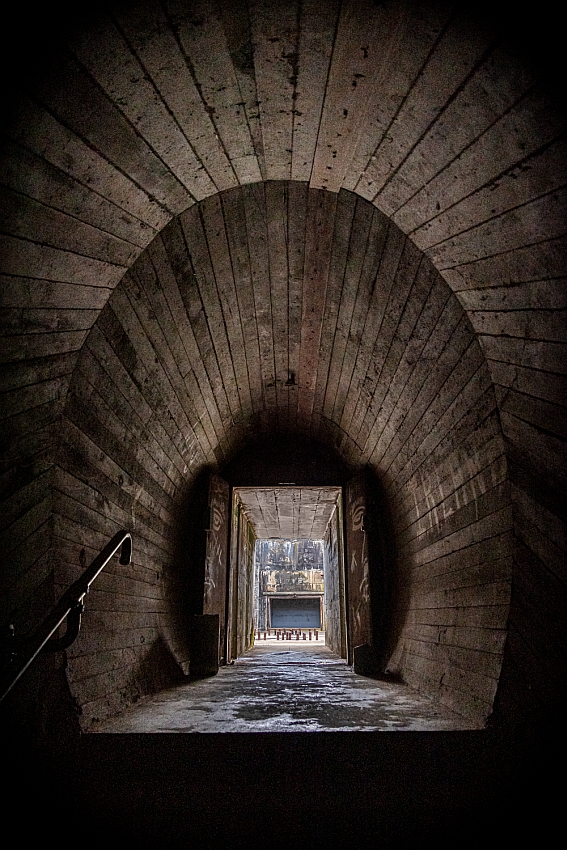
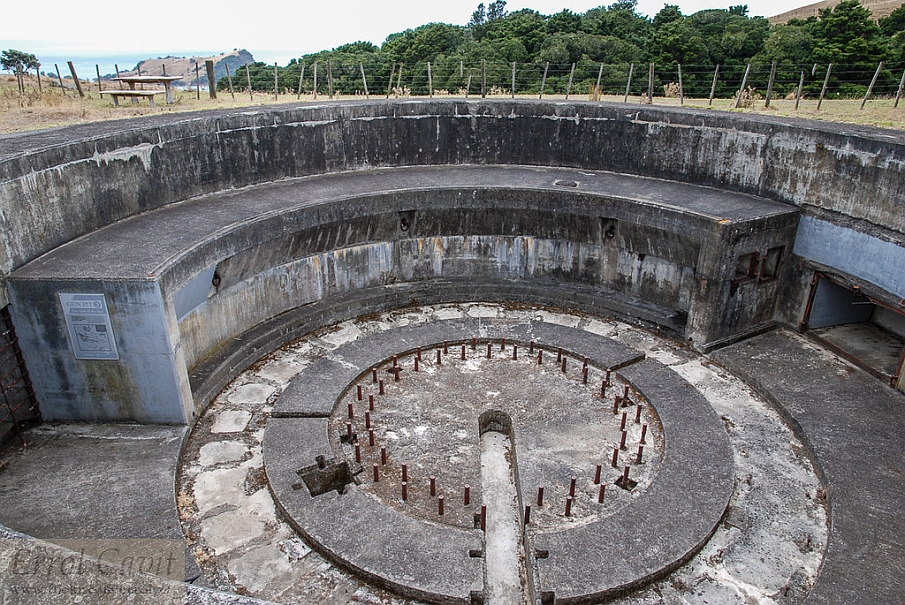
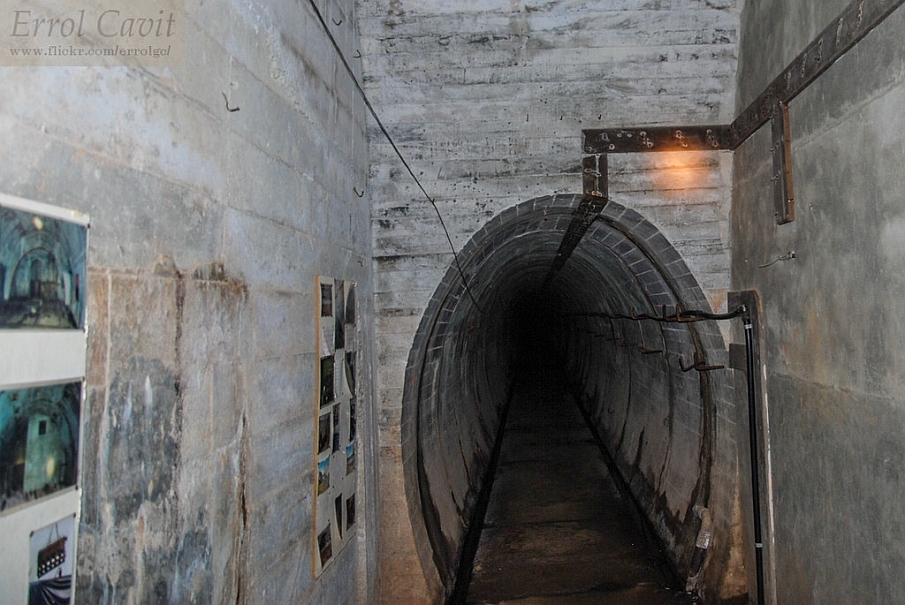
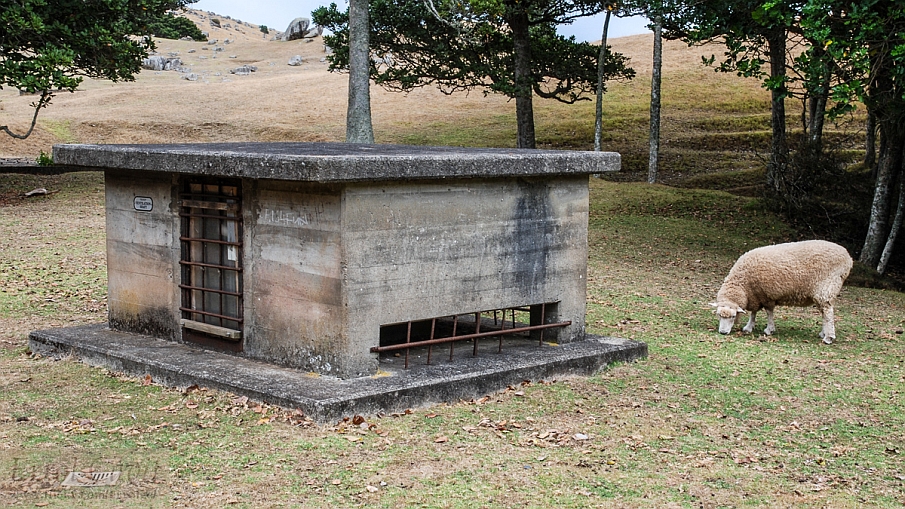
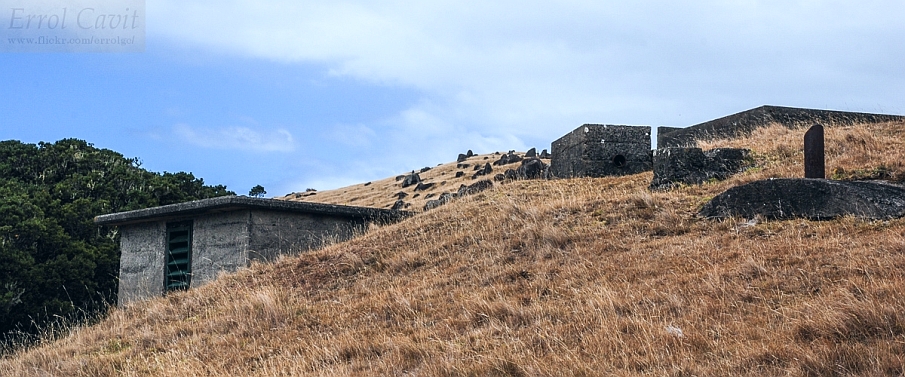
This historic place was registered under the Historic Places Act 1993. This report includes text from the original Historic Place Assessment Under Section 23 Criteria report considered by the NZHPT Board at the time of registration. Architectural: The Waiheke Battery comprises an underground tunnel complex including three magazines, three pump chamber, three gun stores, three toilets, engine room and workshop, plotting room, oil store, interconnecting passages, stairs and entrances. Above ground there are three gun emplacements with a war (crew) shelter at each entrance. Only foundations remain of the workshops at entrance No. 2 and the ordnance workshop. All buildings at the construction workers camp and the camp at Man 0' War Bay have been removed with only a few foundations remaining. The approach road remains in use.
Why is this place Category 1 / Category 2?
Detail Of Assessed Criteria
This historic place was registered under the Historic Places Act 1993. This report includes text from the original Historic Place Assessment Under Section 23 Criteria report considered by the NZHPT Board at the time of registration. (a) The extent to which the place reflects important or representative aspects of New Zealand history: The 9.2-inch batteries at Waiheke vividly illustrate the extent to which the Government, once motivated by events, was prepared to go to defend the country. The battery complex was a major civil engineering project for its era and one of the largest and most modern coastal defence batteries built in New Zealand. (b) The association of the place with events, persons, or ideas of importance in New Zealand history: Ideas: The building of the Waiheke Battery, part of the provision of 9.2-inch guns at Auckland and Wellington (and planned at Lyttelton), was a late reaction to a threat perceived by New Zealand's defence forces as early as 1934; that the ships seen as most likely to make raids on New Zealand cities and ports were armed with guns that could outrange those on planned and existing batteries. As a result the army approved the employment of the standard-issue British Army heavy coast gun, the 9.2-inch, in 1934, but it was rejected by the government because of its cost. Approval for the 9.2-inch batteries came in 1939 with the outbreak of war, but delays in production in Britain delayed their arrival. The outbreak of war in the Pacific in 1941 brought things to a head. The United States Navy, as part of its planned expansion in the South Pacific, required the Marlborough Sounds as an amphibious Warfare training centre, and the Waitemata Harbour as a secure fleet anchorage. The coast defences of Wellington and Auckland were then upgraded. Construction of the 9.2-inch batteries for Wellington and Auckland, where a second battery was added, as well as Lyttelton, now became a priority. Three batteries were built, two in Auckland and one in Wellington, mounting the 9.2- inch Mk XV, a fully-built-up steel gun. These guns were part of the biggest land-based defensive batteries ever erected in New Zealand. Construction began in 1943, with great haste just before the Japanese threat receded, and then slowed to the point that they were not completed by the time the war ended. One battery was not built - Lyttelton - and orders for one of the three guns at the others were cancelled. Waiheke Battery was completed by late 1944, but only to preserve the equipment and armaments already supplied. The guns were not emplaced until 1946 (No.1) and 1948 (No.2) and fired for the only time in 1951. No ammunition was ever installed in the magazines, nor was the fire control equipment put in. (g) The technical accomplishment or value, or design of the place: DATE: 1943-44: Guns Emplaced 1946-48 ARCHITECT: Public Works Department STYLE CODE: MIL: World War II Counter-Bombardment Fortresses, 1942-46 Each 9.2-inch battery was intended to be built to a standard design forwarded by the War Office in London, but for a variety of reasons it emerged as a near totally New Zealand designed battery complex. Probably the prime reason for this was the decision to build the battery complexes underground, rather than on top of the ground, as was the standard War Office design. Because of this, the 9.2-inch batteries are architecturally unique. They each also have the virtue of being subtly different. These large guns were the most complex of any land-based gun in operation in New Zealand in World War II. Each had to be fully worked by power for elevation, traverse and loading, and could fire a round every minute and a half, sometimes quicker. It kept defensive guns so far from their potential attacker that, in the event of an attack, with the aid of forward observation posts, radar and range finding technology, the guns would be able to fire before being fired at. The battery is intact today but retains little of its fabric beyond the concrete shell. Nearly all of its fittings, from the guns down to electrical conduit, have been stripped out, mostly at the time of the scrapping of the guns in 1960. Nevertheless, the sheer extent of the structure means it remains a most significant relic from World War II. Apart from the features it has in common with the other 9.2-inch counter-bombardment batteries, the ground topography at the site at Stony Batter required the building of a huge staircase from the main tunnel complex to the No.1 gun. This feature remains intact.
Why is this place significant?
Historic Significance
Historical Significance or Value This historic place was registered under the Historic Places Act 1993. This report includes text from the original Historic Place Assessment Under Section 23 Criteria report considered by the NZHPT Board at the time of registration. Historical: A long range counter-bombardment battery for the Port of Auckland was first suggested for the Waiheke site in 1938 but final authorisation was not granted until 1942. Many difficulties were encountered over the shortage of construction materials, workers and the sites isolation so that by January 1944, the project was way behind schedule. Noting the large increase in budgeted costs and the overall progress of the war in the pacific, army authorities decided to cancel what they could. The constructional part of the project was completed by mid-1944, when workers were transferred to the Karapiro Hydro project. Army personnel then slowly installed the remaining two guns. By then it had been decided to complete the battery only for training purposes, so the job was not given priority. When the men were withdrawn in 1946 only No.1 gun had been installed, No. 2 lay disassembled by the side of the pit. The site was sealed up for two years when in 1948 No.2 gun was finally installed, and the site was sealed up again. In 1951, as part of a training exercise, each gun was fired twice. The site was scrapped in 1960-61.
Physical Significance
This historic place was registered under the Historic Places Act 1993. This report includes text from the original Historic Place Assessment Under Section 23 Criteria report considered by the NZHPT Board at the time of registration. Architectural: The Waiheke Battery comprises an underground tunnel complex including three magazines, three pump chamber, three gun stores, three toilets, engine room and workshop, plotting room, oil store, interconnecting passages, stairs and entrances. Above ground there are three gun emplacements with a war (crew) shelter at each entrance. Only foundations remain of the workshops at entrance No. 2 and the ordnance workshop. All buildings at the construction workers camp and the camp at Man 0' War Bay have been removed with only a few foundations remaining. The approach road remains in use.
Why is this place Category 1 / Category 2?
Detail Of Assessed Criteria
This historic place was registered under the Historic Places Act 1993. This report includes text from the original Historic Place Assessment Under Section 23 Criteria report considered by the NZHPT Board at the time of registration. (a) The extent to which the place reflects important or representative aspects of New Zealand history: The 9.2-inch batteries at Waiheke vividly illustrate the extent to which the Government, once motivated by events, was prepared to go to defend the country. The battery complex was a major civil engineering project for its era and one of the largest and most modern coastal defence batteries built in New Zealand. (b) The association of the place with events, persons, or ideas of importance in New Zealand history: Ideas: The building of the Waiheke Battery, part of the provision of 9.2-inch guns at Auckland and Wellington (and planned at Lyttelton), was a late reaction to a threat perceived by New Zealand's defence forces as early as 1934; that the ships seen as most likely to make raids on New Zealand cities and ports were armed with guns that could outrange those on planned and existing batteries. As a result the army approved the employment of the standard-issue British Army heavy coast gun, the 9.2-inch, in 1934, but it was rejected by the government because of its cost. Approval for the 9.2-inch batteries came in 1939 with the outbreak of war, but delays in production in Britain delayed their arrival. The outbreak of war in the Pacific in 1941 brought things to a head. The United States Navy, as part of its planned expansion in the South Pacific, required the Marlborough Sounds as an amphibious Warfare training centre, and the Waitemata Harbour as a secure fleet anchorage. The coast defences of Wellington and Auckland were then upgraded. Construction of the 9.2-inch batteries for Wellington and Auckland, where a second battery was added, as well as Lyttelton, now became a priority. Three batteries were built, two in Auckland and one in Wellington, mounting the 9.2- inch Mk XV, a fully-built-up steel gun. These guns were part of the biggest land-based defensive batteries ever erected in New Zealand. Construction began in 1943, with great haste just before the Japanese threat receded, and then slowed to the point that they were not completed by the time the war ended. One battery was not built - Lyttelton - and orders for one of the three guns at the others were cancelled. Waiheke Battery was completed by late 1944, but only to preserve the equipment and armaments already supplied. The guns were not emplaced until 1946 (No.1) and 1948 (No.2) and fired for the only time in 1951. No ammunition was ever installed in the magazines, nor was the fire control equipment put in. (g) The technical accomplishment or value, or design of the place: DATE: 1943-44: Guns Emplaced 1946-48 ARCHITECT: Public Works Department STYLE CODE: MIL: World War II Counter-Bombardment Fortresses, 1942-46 Each 9.2-inch battery was intended to be built to a standard design forwarded by the War Office in London, but for a variety of reasons it emerged as a near totally New Zealand designed battery complex. Probably the prime reason for this was the decision to build the battery complexes underground, rather than on top of the ground, as was the standard War Office design. Because of this, the 9.2-inch batteries are architecturally unique. They each also have the virtue of being subtly different. These large guns were the most complex of any land-based gun in operation in New Zealand in World War II. Each had to be fully worked by power for elevation, traverse and loading, and could fire a round every minute and a half, sometimes quicker. It kept defensive guns so far from their potential attacker that, in the event of an attack, with the aid of forward observation posts, radar and range finding technology, the guns would be able to fire before being fired at. The battery is intact today but retains little of its fabric beyond the concrete shell. Nearly all of its fittings, from the guns down to electrical conduit, have been stripped out, mostly at the time of the scrapping of the guns in 1960. Nevertheless, the sheer extent of the structure means it remains a most significant relic from World War II. Apart from the features it has in common with the other 9.2-inch counter-bombardment batteries, the ground topography at the site at Stony Batter required the building of a huge staircase from the main tunnel complex to the No.1 gun. This feature remains intact.
Construction Professional
Name
War Office
Type
Architect
Biography
No biography is currently available for this construction professional
Construction Details
Start Year
1943
Type
Original Construction
Construction Professional
Name
War Office
Type
Architect
Biography
No biography is currently available for this construction professional
Construction Details
Start Year
1943
Type
Original Construction
Historical and Associated Iwi / Hapū / Whānau
Information Sources
Corbett, 1966
P. Corbett, 'World War II Defences At Stoney Battery (Waiheke Island) and Whangaparoa', Auckland, 1966
Grattan, 1948
F G Grattan, 'Official War History of the Public Works Department', Wellington, 1948, Public Works Dept
New Zealand Defence Force
New Zealand Defence Force
McIntyre, 1988
W D McIntyre, New Zealand Prepares for War, University of Canterbury Press, Christchurch, 1988
Other Information
A copy of the original report is available from the NZHPT Northern region office Please note that entry on the New Zealand Heritage List/Rarangi Korero identifies only the heritage values of the property concerned, and should not be construed as advice on the state of the property, or as a comment of its soundness or safety, including in regard to earthquake risk, safety in the event of fire, or insanitary conditions.
Historical and Associated Iwi / Hapū / Whānau
Information Sources
Corbett, 1966
P. Corbett, 'World War II Defences At Stoney Battery (Waiheke Island) and Whangaparoa', Auckland, 1966
Grattan, 1948
F G Grattan, 'Official War History of the Public Works Department', Wellington, 1948, Public Works Dept
New Zealand Defence Force
New Zealand Defence Force
McIntyre, 1988
W D McIntyre, New Zealand Prepares for War, University of Canterbury Press, Christchurch, 1988
Other Information
A copy of the original report is available from the NZHPT Northern region office Please note that entry on the New Zealand Heritage List/Rarangi Korero identifies only the heritage values of the property concerned, and should not be construed as advice on the state of the property, or as a comment of its soundness or safety, including in regard to earthquake risk, safety in the event of fire, or insanitary conditions.
Themes
Coastal Defences
Web Links
description: Engineering NZ Heritage
url: https://www.engineeringnz.org/our-work/heritage/heritage-records/stony-batter-gun-emplacement/
Themes
Coastal Defences
Web Links
description: Engineering NZ Heritage
url: https://www.engineeringnz.org/our-work/heritage/heritage-records/stony-batter-gun-emplacement/
